
Category: News Page
-
Status of the Hollow e-lens
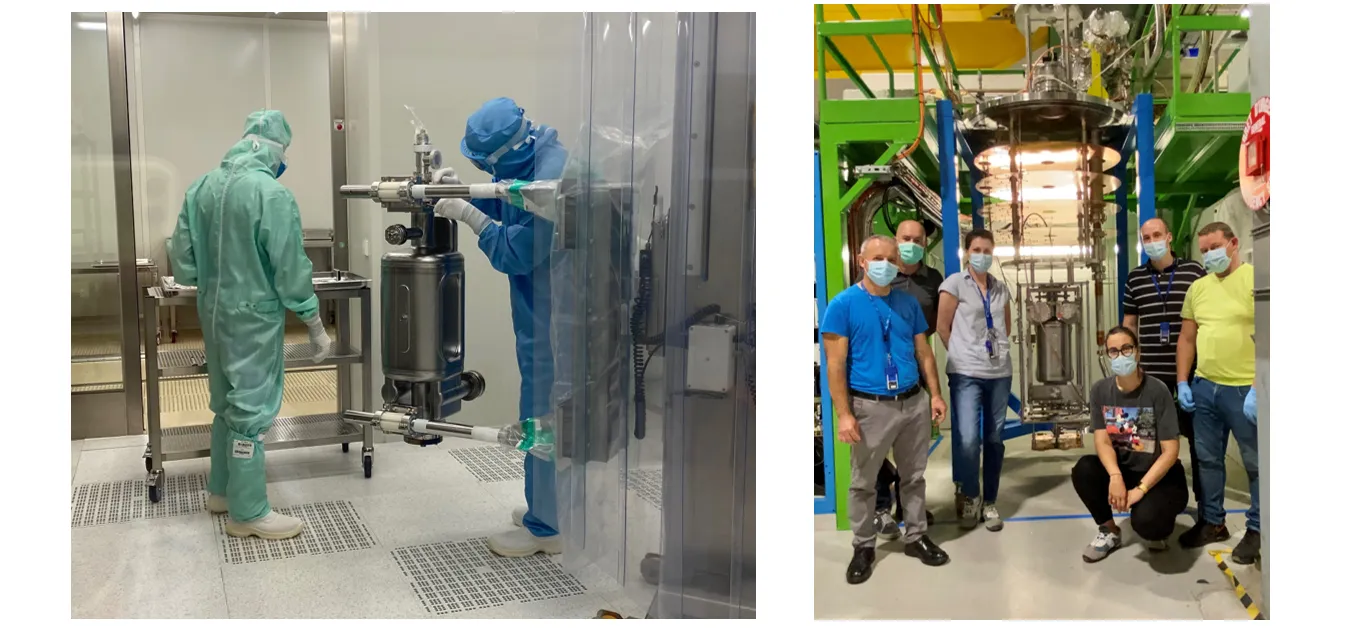
The Hollow Electron Lens (HEL) will provide, by means of a hollow electron beam overlapping over about 3 m length with the HL-LHC hadron beam, an active way to enhance particle diffusion and controlled depletion of the hadron beams tails. It is planned to be built partly as an in-kind contribution from Russia and the
-
RFD Cavity Tests at 2K
The two RF dipole crab (RFD) cavities being prototyped for the SPS tests underwent an ultra-pure water rinsing for a period of approximately 7 hours at very high pressure of 100 bar. This process has proven to be a key step in the cavity preparation to reach extremely high fields and suppress electron field emitters
-
Status of MQXF production and test results
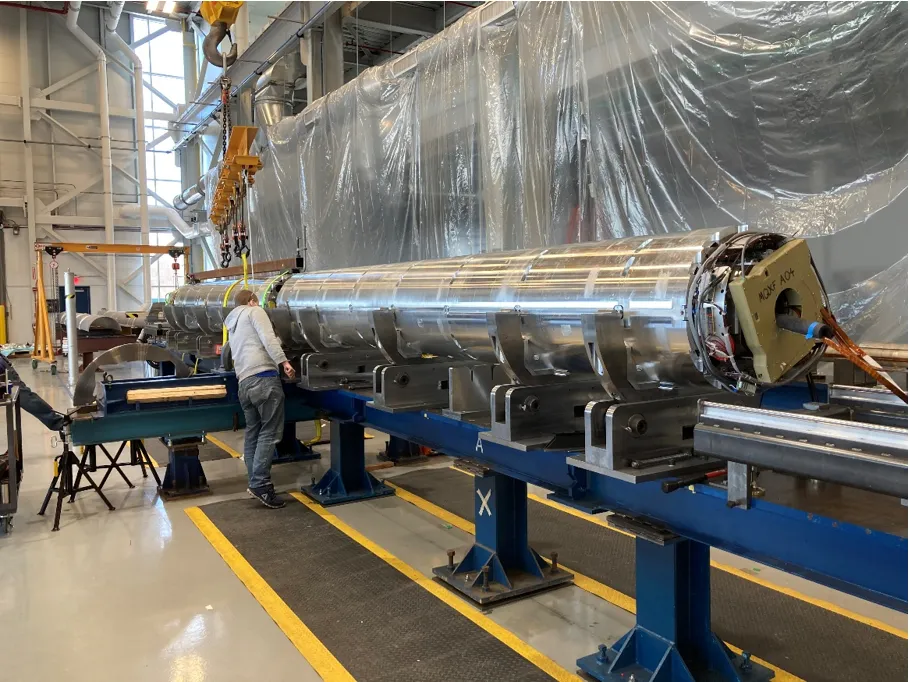
Nb3Sn triplet (MQXF) After the successful tests of MQXFA03 and MQXFA04, that allowed last year to obtain the approval of the US contribution by the DOE, MQXFA05 has been tested in May 2021. The magnet (in a vertical dewar and without outer stainless-steel shell, as MQXFA03 and MQXFA04) reached the required performance, confirming the absence
-
Performance ramp-up in the HL-LHC era
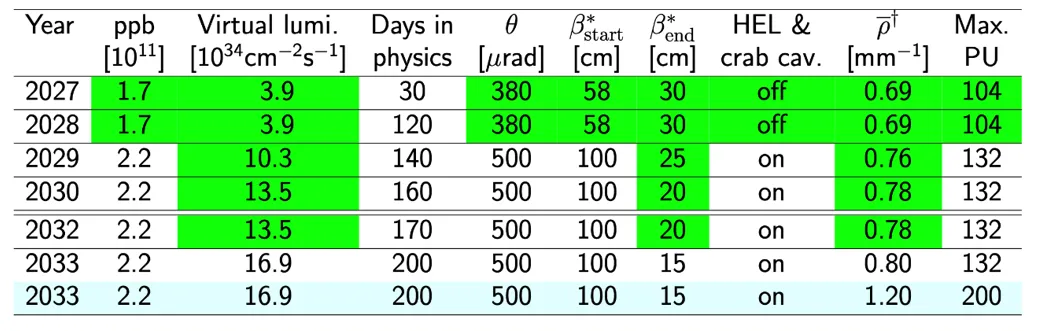
The performance ramp-up of the LHC after LS3 foresees a smooth ramp-up of the effective pile-up density for the nominal case, with a nominal bunch intensity reached after two years (i.e. as of 2029: 1.7 × 10¹¹ in 2027 and 2028 is a placeholder for the bunch intensity reached in Run3 in LHC, whose target
-
Report from the TCC
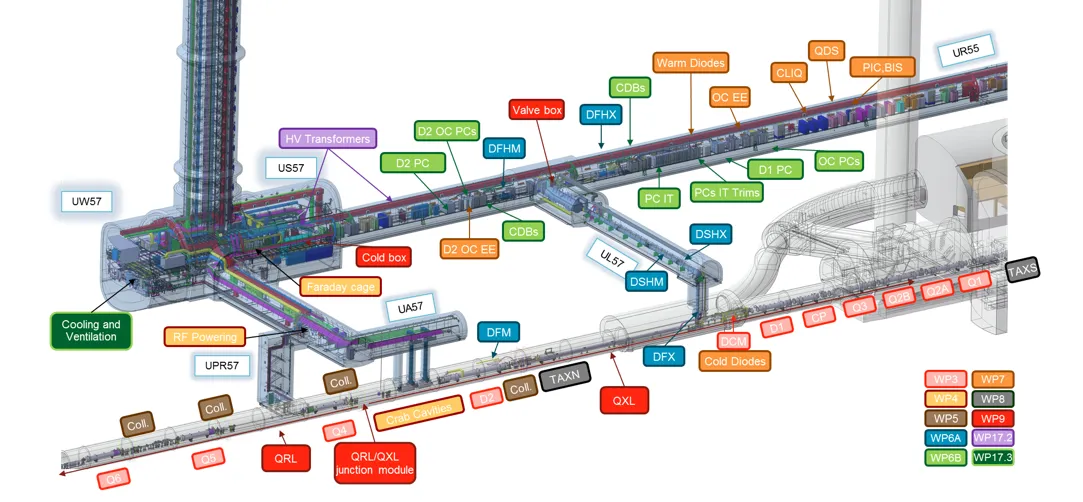
The HL-LHC Technical Coordination Committee has continued its work for the follow-up and evolution of the technical baseline of the project in a fully remote format. While the current restrictions still prohibit in-person meetings, the remote format has been allowed more active participation from all collaborators, which is an important asset for the current project
-
Update on the HL-LHC Project Status – Issue 5
The progress since the last collaboration meeting in October 2020 has been truly remarkable and the project successfully passed several key milestones for the project implementation in spite of the COVID-19 restrictions. Among the many achievements, I would like to highlight here the successful validation of two pre-series MQXFA triplet quadrupole magnets by our US
-
Summary of the TCC Day and New Schedule as Agreed on during November Meeting in 2019
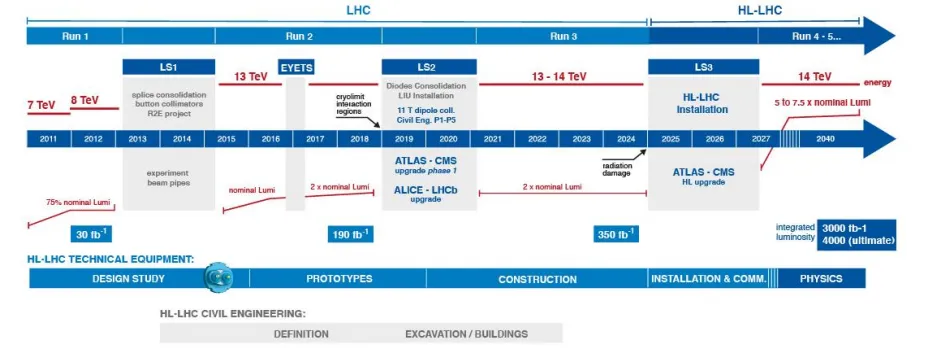
In an effort to further enhance the communication and transparency of activities having potential dependencies in terms of schedule or resources on other HL-LHC WPs, a first TCC day was organised on 12th March 2020. The meeting was also the occasion to commonly discuss all further opportunities of descoping and to assess the consequences of
-
Qualifying Magnets and Cavities at FREIA
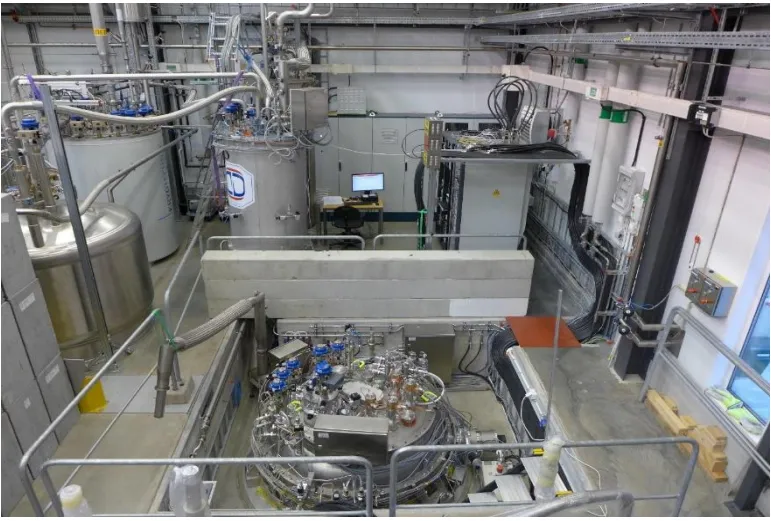
Uppsala University in Sweden has been a valuable collaborator since the foundation of CERN. In the 1950’s, Uppsala, having just constructed its own cyclotron, contributed to the development of the very first accelerator at CERN: the synchrocyclotron. In the 1980’s CERN assisted Uppsala with the construction of a proton and heavy-ion accelerator and cooler-storage ring
-
11T First Successful Magnet Tests
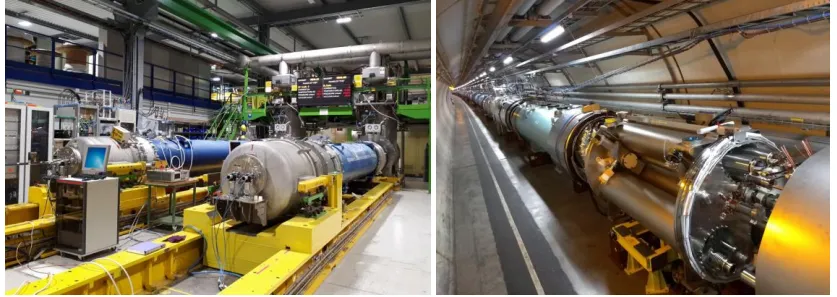
Since Issue 3 of the HL-LHC CB Newsletter, three of the six series magnets were tested at cold [S1, S2, and S3], and another one [S4] is ready for testing on a test bench in SM18. On the side of production, the construction of the cold mass assembly of the first spare magnet has started.
-
Cooling Capacity Upgrade at LHC P4
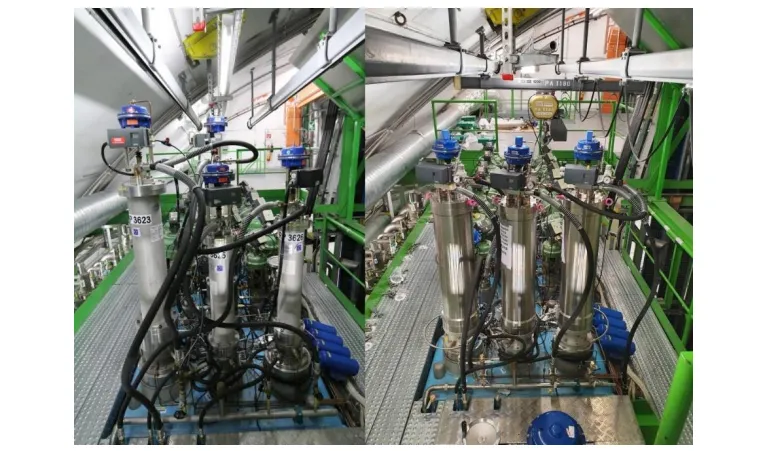
The LHC sectors are cooled by eight similar helium refrigerators. P4 needs more cooling capacity due to the superconducting RF. This has not limited LHC so far but would be a bottleneck for the HL-LHC era. Following conceptual studies ranging from completely new cryogenic infrastructure to partial modifications, it was decided to upgrade the existing