
Category: Issue 05
-
Planning of the 2021 Annual Meeting
Due to the COVID-19 restrictions last year, the 2020 annual meeting initially planned to take place in Uppsala had to be postponed and instead the 10th HL-LHC Collaboration Meeting was held in virtual form and limited to plenary sessions. While some uncertainty remains, we are more optimistic this year. We are therefore pleased to announce
-
HL-LHC Industrialization
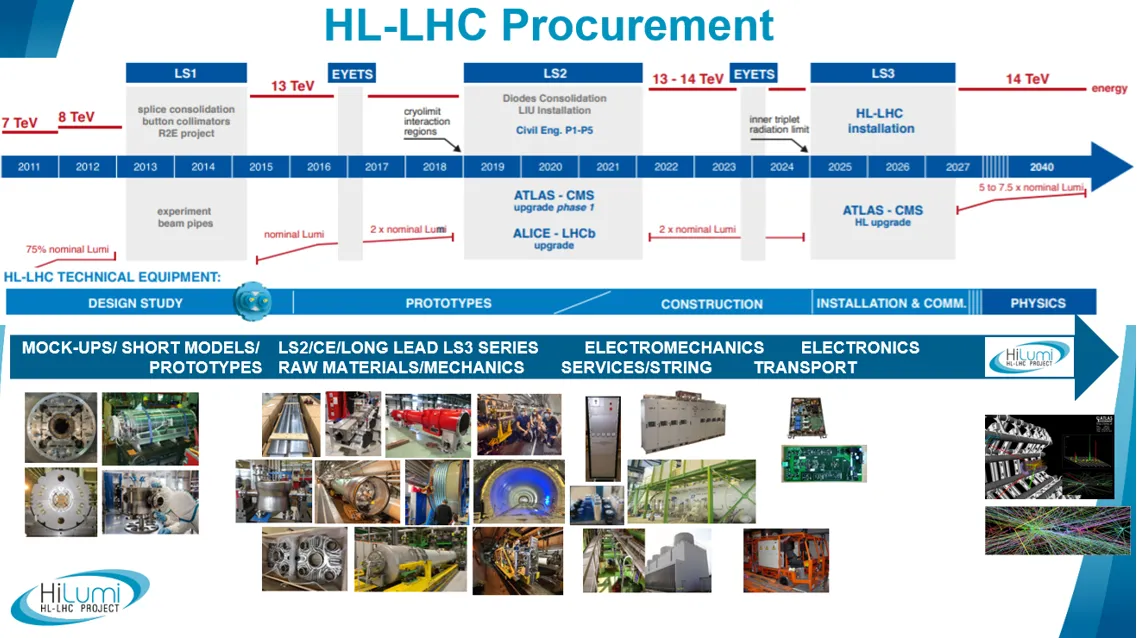
The High-Luminosity Project is nowadays in the transition from the prototyping phase into full construction mode and most of the activities in view of the series production for the HL-LHC hardware have already started. Procurement and industrialization are closely following the natural evolution of the project and are running in parallel to the project milestones.
-
Preparation of the C&S Review 2021
At the request of the management of CERN, four extensive Cost and Schedule Reviews (CSR) of both the LIU and the HL-LHC projects were carried out in March 2015, October 2016, March 2018, and November 2019. An international panel of experts, headed by the CERN Machine Advisory Committee chairman and composed by the CMAC members
-
Update on Collaboration agreements and report from the Collaboration Board at the last Annual Meeting
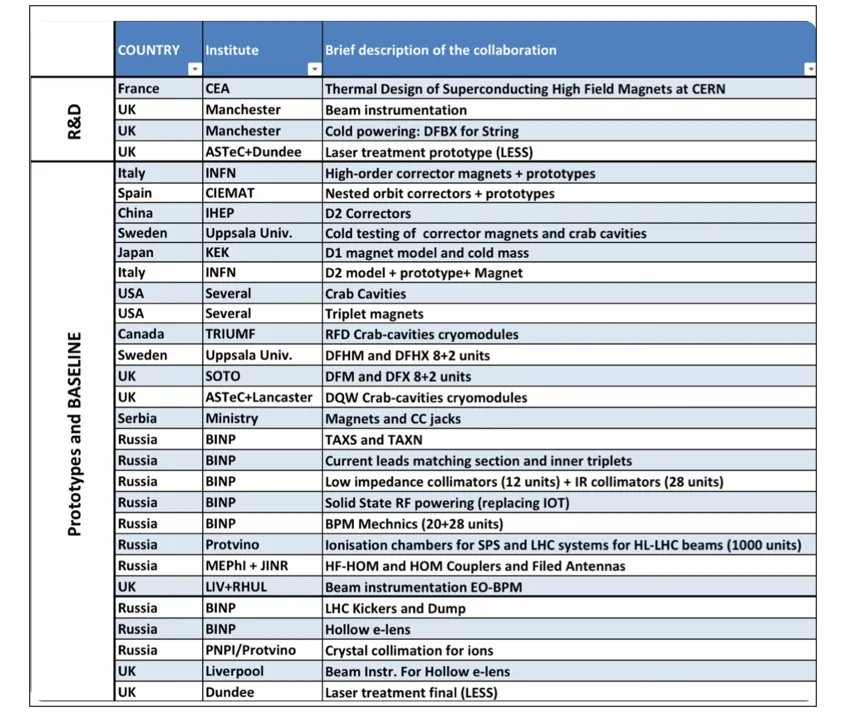
The still unresolved COVID-19 pandemic, which defined the year 2020, has unsurprisingly had an impact on our collaborations. However, the impact appears to be contained to a few months, with delays that can be reabsorbed and are also partially mitigated by the decision taken after the 2019 C&SR to delay the start of LS3 by
-
Status of civil engineering works
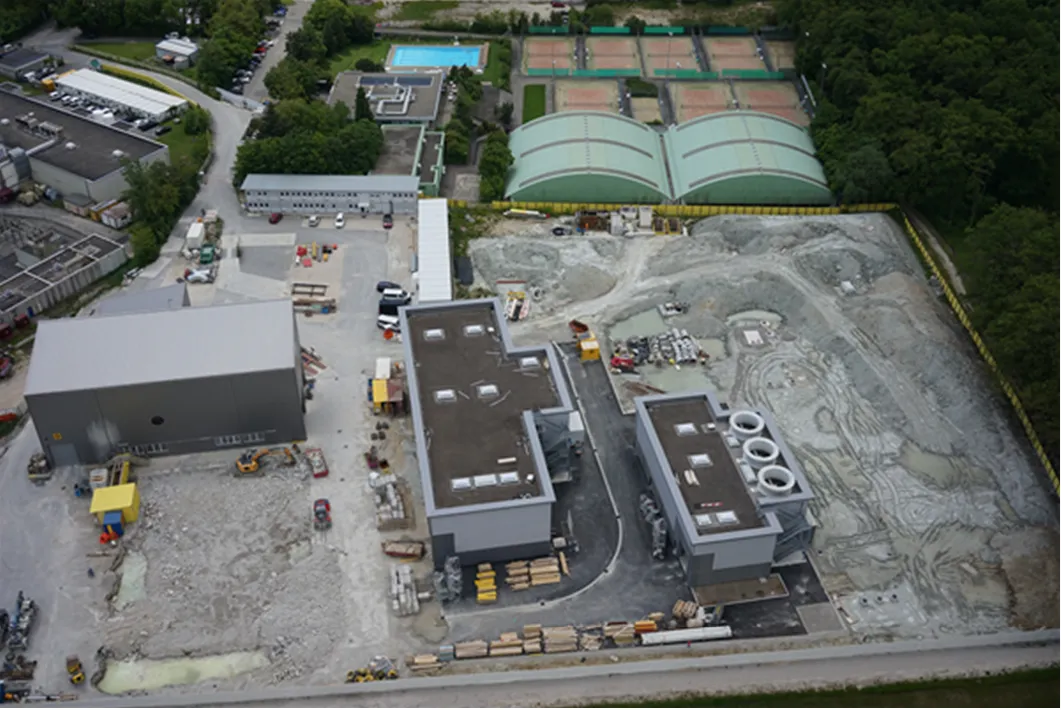
In spite of the perturbation related to the COVID-19 pandemic, the civil engineering works is progressing well. Figure 1 shows the civil engineering status. At Point 1, the final lining of the underground structures is fully completed and the installation of metallic structures, concrete modules, separation walls and safe rooms in the cavern and in
-
Implementation of crystal collimation of heavy ion beams for Run3 in absence of 11 T dipoles
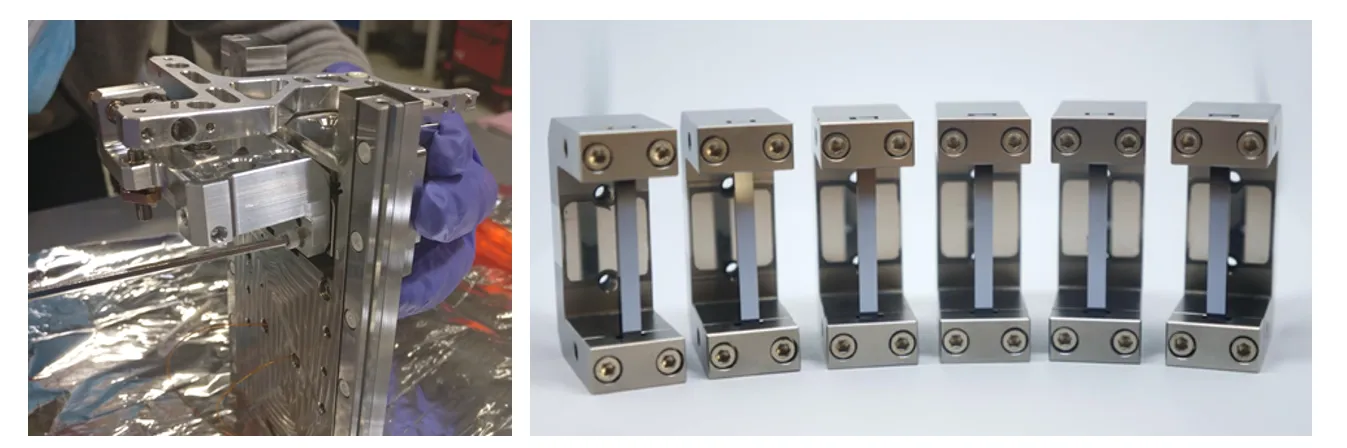
Following the recommendation of the C&SR 2019, crystal collimation was successfully integrated in the WP5 upgrade baseline as an in-kind item to mitigate schedule issues with the 11 T dipoles which have shown potential reliability issues for long-term operation in the accelerator. A detailed investigation program is currently underway to understand the root cause of
-
Status of the Hollow e-lens
The Hollow Electron Lens (HEL) will provide, by means of a hollow electron beam overlapping over about 3 m length with the HL-LHC hadron beam, an active way to enhance particle diffusion and controlled depletion of the hadron beams tails. It is planned to be built partly as an in-kind contribution from Russia and the
-
RFD Cavity Tests at 2K
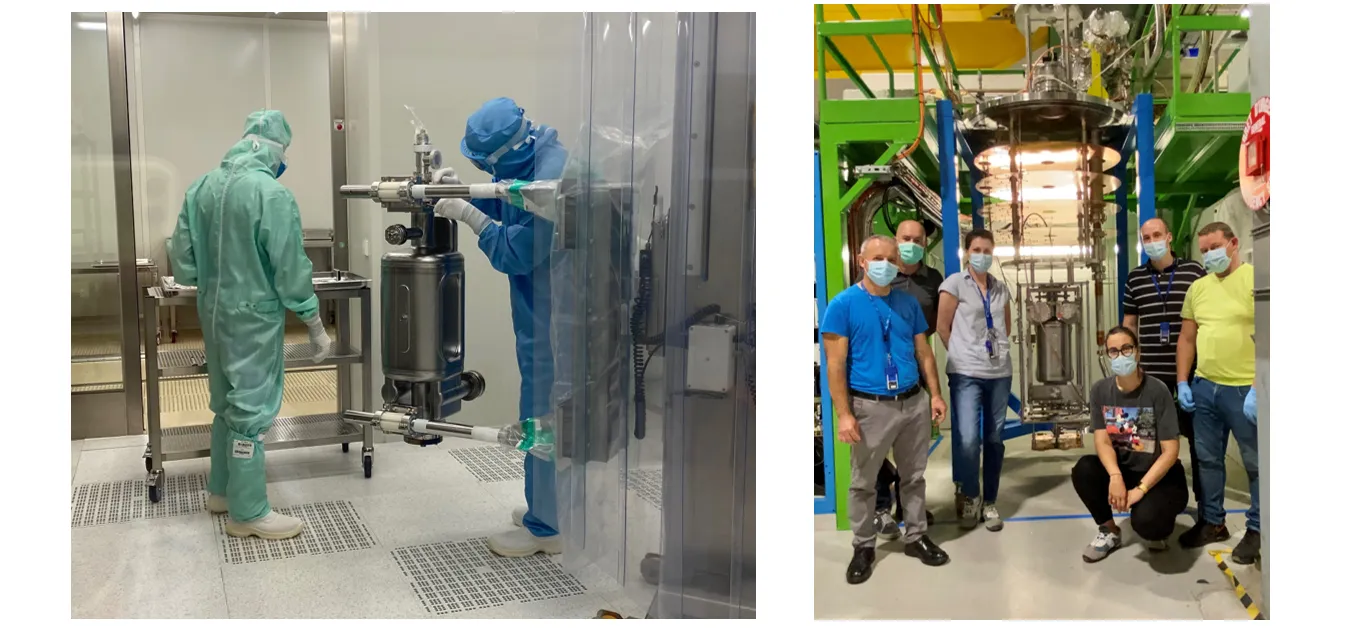
The two RF dipole crab (RFD) cavities being prototyped for the SPS tests underwent an ultra-pure water rinsing for a period of approximately 7 hours at very high pressure of 100 bar. This process has proven to be a key step in the cavity preparation to reach extremely high fields and suppress electron field emitters
-
Status of MQXF production and test results
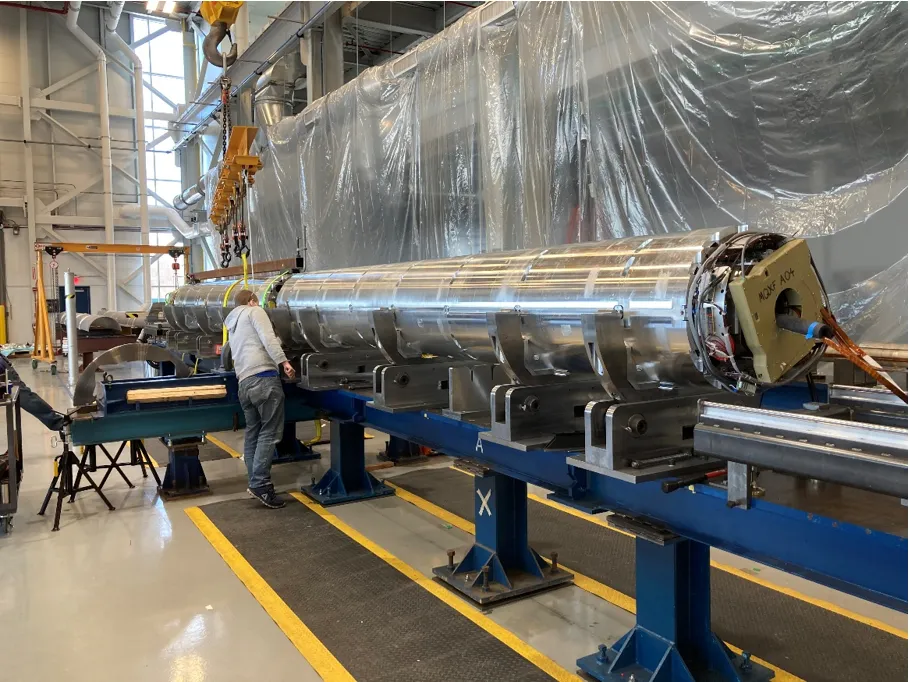
Nb3Sn triplet (MQXF) After the successful tests of MQXFA03 and MQXFA04, that allowed last year to obtain the approval of the US contribution by the DOE, MQXFA05 has been tested in May 2021. The magnet (in a vertical dewar and without outer stainless-steel shell, as MQXFA03 and MQXFA04) reached the required performance, confirming the absence
-
Performance ramp-up in the HL-LHC era
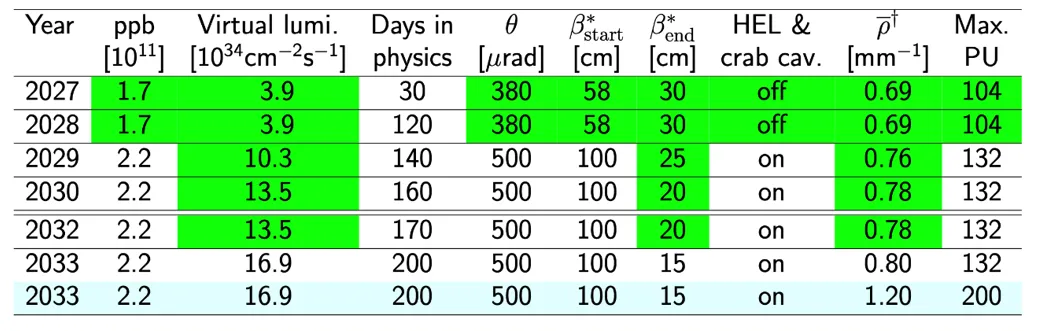
The performance ramp-up of the LHC after LS3 foresees a smooth ramp-up of the effective pile-up density for the nominal case, with a nominal bunch intensity reached after two years (i.e. as of 2029: 1.7 × 10¹¹ in 2027 and 2028 is a placeholder for the bunch intensity reached in Run3 in LHC, whose target