
Category: Issue 03
-
Update on the Collaboration Members and Contributions
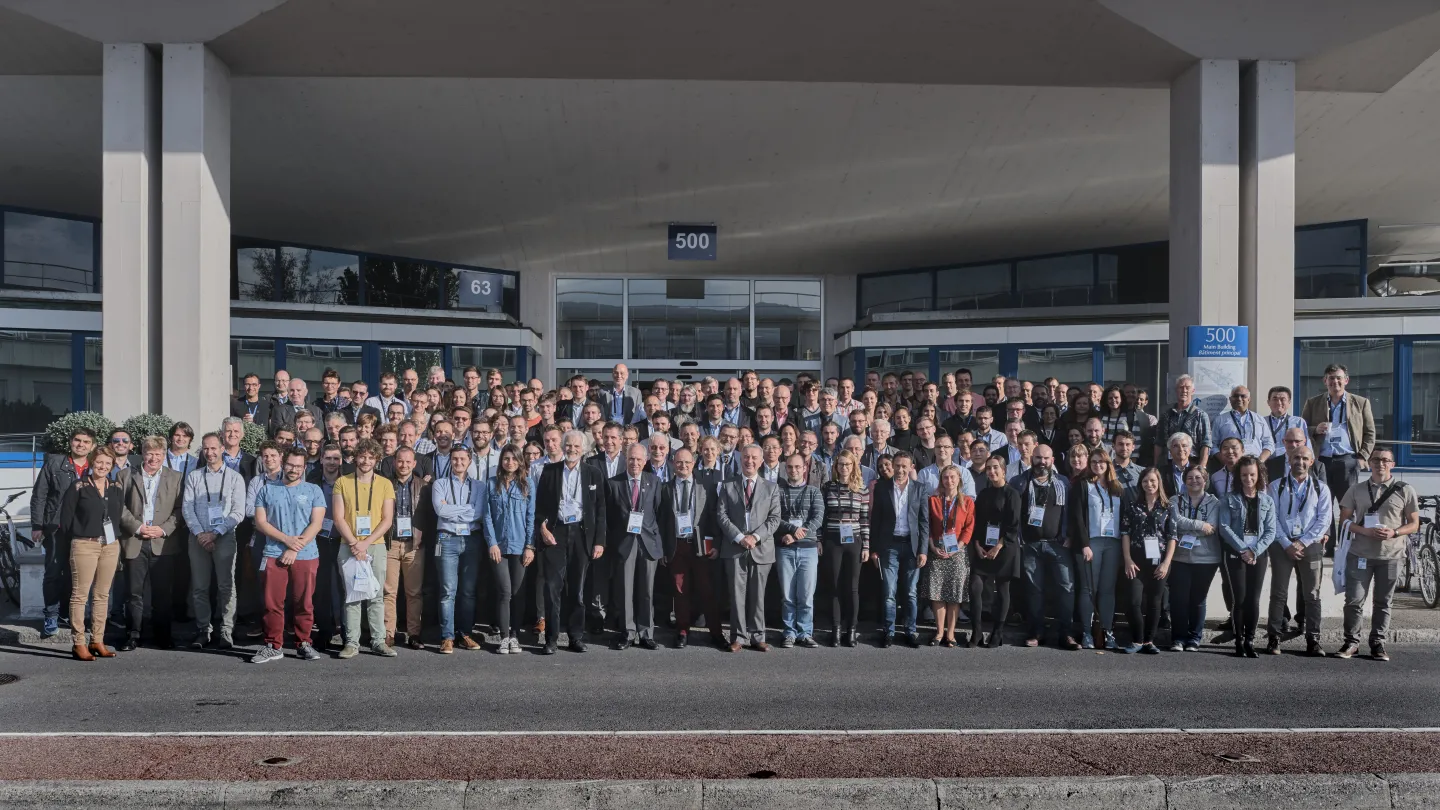
The 8th HL-LHC Collaboration Board took place during the last HL-LHC Annual Meeting in October 2018 at CERN. During the last months, several collaboration agreements have been prepared and are in the process of signature or advanced stage of finalization. – INFN for the production of the D2 cold masses. INFN is finalizing prototypes and
-
Update on the HL-LHC Project Status – Issue 3
As mentioned in the closing remarks of the 8th HL-LHC Annual Meeting held at CERN (18th October 2018), the project is experiencing a mix of success and difficulties while passing from design and industrialization into construction. The most delicate point is certainly the unexpected bad behaviors of some prototypes and model magnets. The HL-LHC magnets
-
Update on Civil Engineering Work for HL-LHC
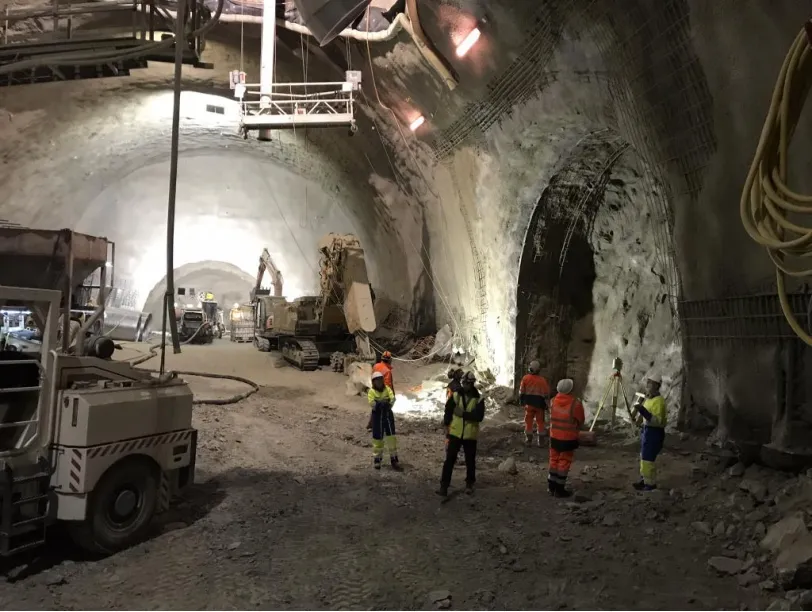
The two civil-engineering contractors, MARTI for the Point 1 works and IMPLENIA for the Point 5 works, are fully mobilized. The excavations of the shafts at Points 1 and 5 were completed in February 2019 and December 2018, respectively. The shaft excavation were performed during the LHC physics Run2, with very minor impacts on the
-
Production Readiness reviews
Two production readiness reviews where conducted at CERN: one for the pressure vessels and one for the MgB2 cable production. The pressure vessel review covered the scope and interfaces, quality assurance, manufacturing and inspection plan, documentation procedures, production schedule and associated resources. In general, everything is well defined and only some improvements to be made
-
D1 and D2 and HO corrector review
In December 2018, a review of the design of the D2 correctors and HO correctors took place in CERN. The committee supported the selected designs that showed to reach the required performance. For the D2 correctors, based on the CCT concept that is being used at CERN for the first time, a special effort on
-
DFX review and design modifications
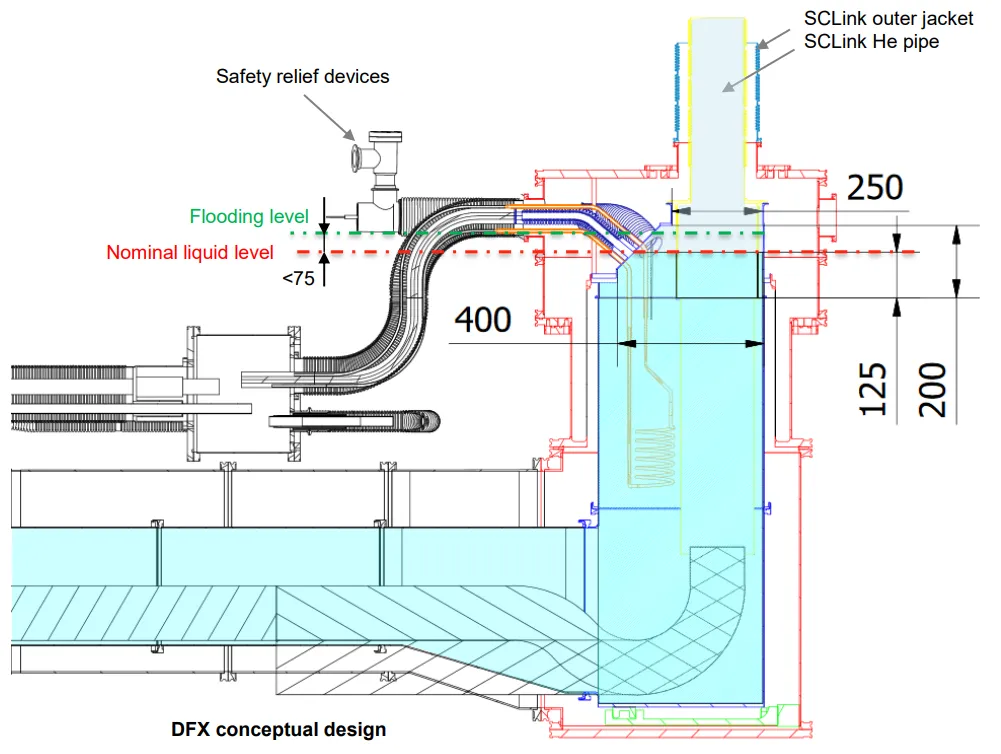
On the 31st January 2019 (with a 2nd final session on the 12th February), a DFX Conceptual Design Review was held at CERN. The DFX (Distribution Feed Box) is a key element of the cryogenic powering line for the new magnets of the LHC interaction regions at IP1 and IP5. This powering line, the so-called
-
Technical reviews of the HL-LHC Beam Dump System, the Collimation System and the Crab Cavity System
The CERN internal review of the HL-LHC Beam Dump System [BDS] took place on February 5th and was chaired by Volker Mertens. It was to a large extent triggered by two observations from the LHC beam operation towards the end of Run2, which led to the recommendation of integrating two options of the HL-LHC project
-
Decision to delay the IT String test by one year and to limit the IT String test to one year operation
The HL-LHC magnets and cold powering systems are planned to be tested individually on dedicated test benches in the SM18 test facility at CERN or at the collaborators test facility (e.g. at Fermilab in the USA). The HL-LHC IT STRING will reproduce on the surface the configuration of the left side of Point 5 with
-
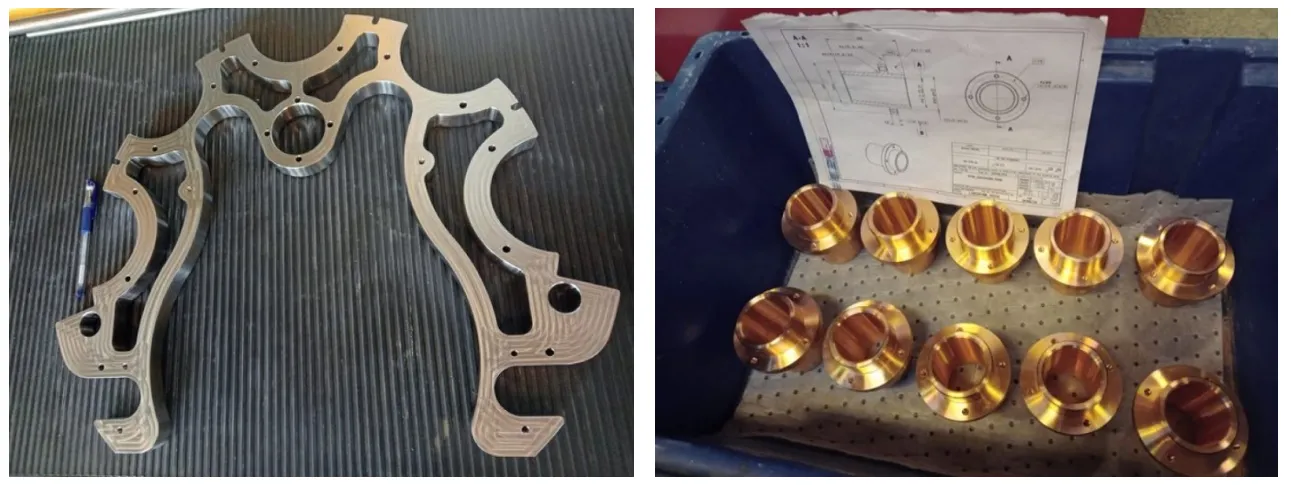
Update on the collimator developments: first picture of the TCLD from CINEL
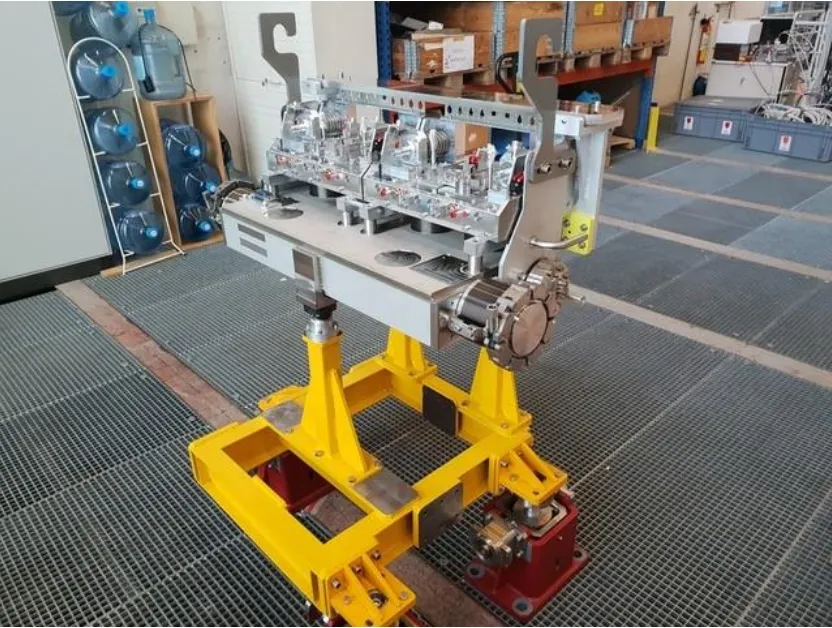
One important upgrade for HL-LHC is the installation of new collimators, called TCLD, in the dispersion suppressors next to IR7 and IR2. The TCLDs are needed for proton and heavy-ion operation to intercept particles that differ from the main beam in either energy or, in the case of ions, charge-to-mass ratio. In IR7, the source
-
11T: Decision to install the collimator package in MB9 and update on the latest prototype test results and test plans
Since Issue 2 of the Newsletter, it was decided to change the installation position of the dispersion suppressor collimators (TCLD) of IR7 from cell 8 to cell 9 in order to provide a much better cleaning in cell 11 for both protons and ions operation. Although this implies a higher power density deposited in the