
Beam-gas curtain production and testing on track, and SPS tests of electro-optical BPM ongoing
The novel beam-gas curtain prototype, installed in the LHC, is providing valuable insights on beam profile measurements in the High-Luminosity era for both proton and ion beams, and production of the second of the series is foreseen before LS3.

The Beam-Gas Curtain (BGC) collaboration is part of the HL-UK agreement producing a novel instrument for measuring transverse beam profiles for the High-Luminosity LHC (HiLumi LHC). The instrument has been developed specifically to image the larger, hollow electron beams that can be generated in the electron beam test stand at CERN for a future hollow electron lens device.
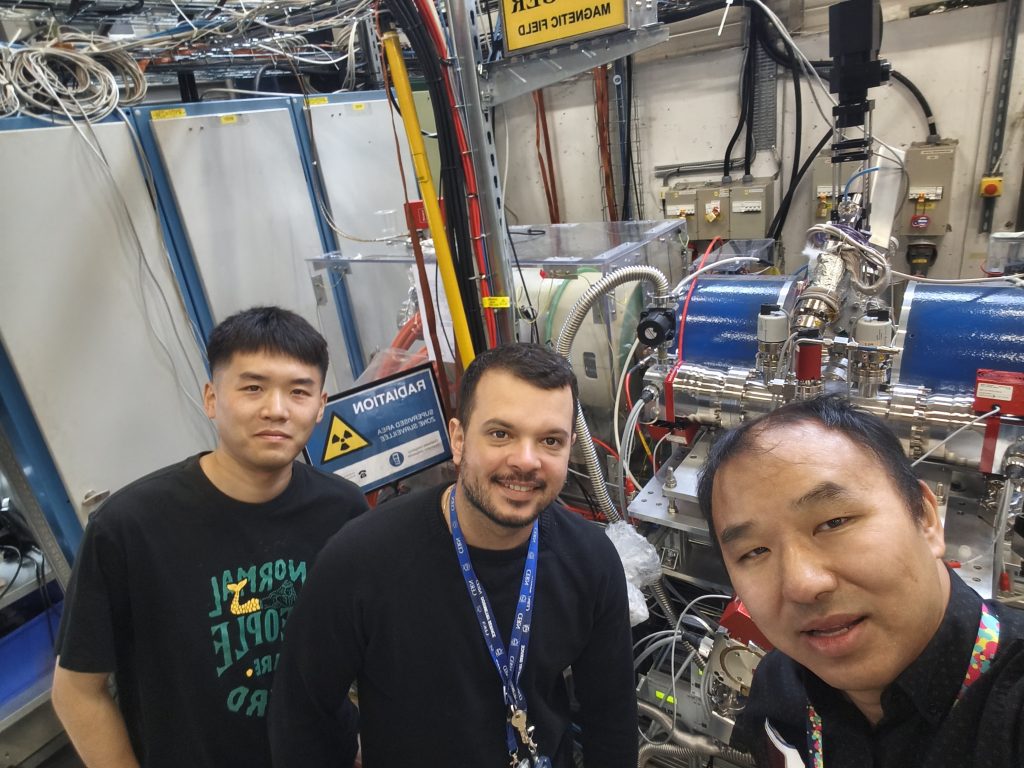
The teams from the Cockcroft Institute and CERN, supported by experts from GSI, met at the GSI facilities in February to discuss delivery and testing of the recently completed first series instrument on a dedicated electron beam test stand at CERN.
In the meeting we looked at the wealth of data being collected by the final prototype instrument, installed in the LHC and now operational for both protons and ions. This is providing valuable information on the beam profile through the ramp, as well as beam profiles for ion beams, neither of which are available via other instruments. Following the successful HiLumi LHC Beam Profile Review in September 2025, the second BGC instrument foreseen by this collaboration is now being prepared for installation on the LHC Beam 2 during Long Shutdown 3.
The installation of the first BGC onto the electron beam test stand is in itself an illustration of the breadth of collaborations we have for HiLumi LHC; in addition to the teams from the Cockcroft Institute and CERN, the work was also supported by Pedro Souza, a technical engineer from the Brazilian CNPEM Institute who is integrated into our Work Package 13 (responsible for beam instrumentation) activities via another collaboration.
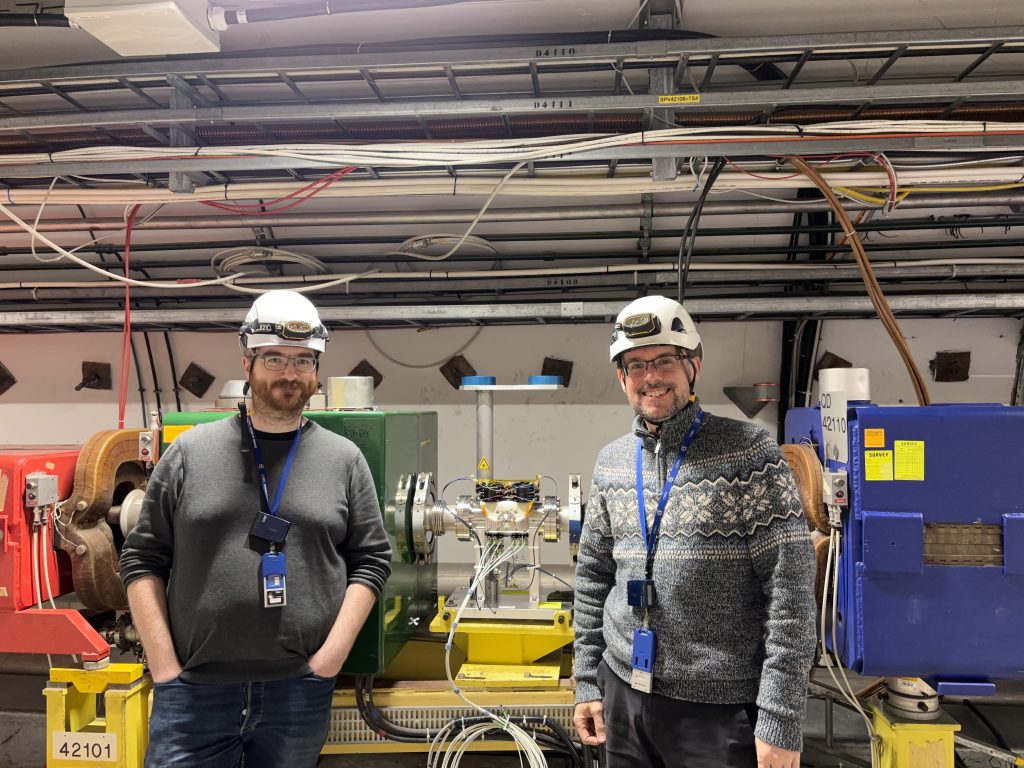
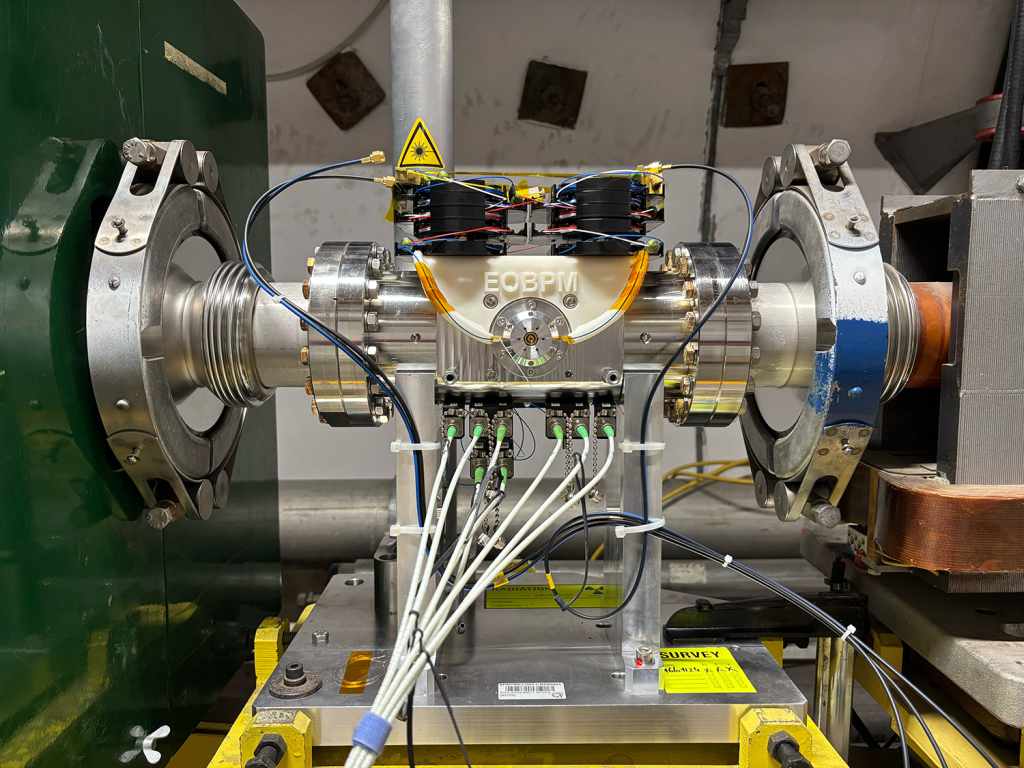
An electro-optical pickup, developed to look in detail at the “crabbed” HiLumi beams, is under development by the HL-UK team at Royal Holloway, University of London. This has been installed and is under tests alongside the crab cavities in the SPS at CERN. The latest shutdown allowed the implementation of some improvements to the optical system along with a new architecture for testing.